
How to Install a Jet Ski Impeller: DIY Guide | PWCParts.com
Posted by PWCParts Team on May 12th 2026
How to Install a Jet Ski Impeller: DIY Guide | PWCParts.com
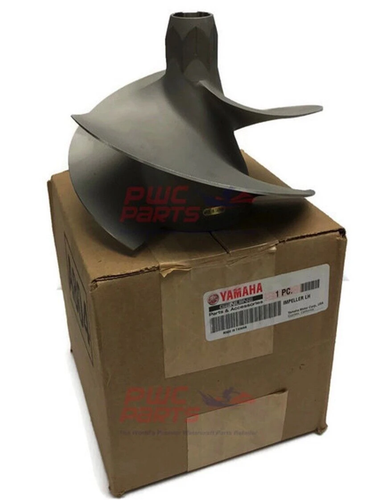
Your jet ski's impeller is the heart of its propulsion system — a rotating blade assembly inside the jet pump that converts engine power into thrust. When it's worn, chipped, or the wrong pitch for your riding style, you lose speed, acceleration, and fuel efficiency. The good news? Swapping an impeller is one of the most rewarding DIY jobs you can do on a PWC. With the right tools and about two hours of your afternoon, you can go from soft and sluggish to digging hard out of every turn. Here's exactly how to do it.

What You'll Need Before You Start
Gather everything before you pull the ski out of the water — nothing kills momentum like running to the hardware store mid-job. Here's your shopping list:
- Replacement impeller — matched to your make, model, and year. Browse our full selection of jet ski impellers at PWCParts.com to find the right pitch for your riding style.
- Wear ring — if you're pulling the pump apart, always inspect the wear ring and replace it if there's any visible gap or scoring. Tight clearances mean big thrust. Check our wear ring catalog for your model.
- Impeller removal/installation tool — model-specific. Do not improvise. A slip here can destroy the pump housing.
- Torque wrench
- Large flat-blade screwdriver or spanner wrench (for the pump cap, depending on brand)
- Marine grease
- Shop rag and parts cleaner
- Safety glasses and gloves
If you're already replacing the impeller, it costs almost nothing extra to drop in a fresh wear ring and impeller shaft seal at the same time. Doing a complete pump rebuild in one session is always smarter than pulling it apart twice.
Step 1 — Flush and Drain the Ski
Connect your garden hose to the flush port and run the engine for 90 seconds to clear any salt, sand, or debris from the cooling passages. Then shut it down and let everything drain. You don't want water pooling in the bilge while you're working. Tip the nose up slightly on the trailer if your model tends to hold water at the stern.
Step 2 — Remove the Pump Assembly
Most jet ski pumps are accessed from the rear of the hull. The exact process varies by brand, but the general sequence is:
- Disconnect the steering nozzle linkage and reverse bucket cable (if equipped).
- Remove the ride plate or pump intake grate — usually 4–6 bolts on the underside of the hull. Inspect the grate for cracks or debris while you're here.
- Disconnect the pump from the hull — typically 4 bolts going through the pump housing into the hull floor.
- Disconnect the driveshaft from the engine coupler. On most models this involves removing a coupler bolt and wiggling the pump rearward to free the shaft.
- Lift the entire pump assembly clear of the hull. Keep a rag underneath — there will be residual water.
Pro tip: Take photos of each connection point before disconnecting anything. Twenty minutes of documentation saves an hour of head-scratching at reassembly.
Step 3 — Disassemble the Pump and Remove the Old Impeller
With the pump on the workbench:
- Remove the pump nozzle (the cone-shaped piece at the exit). It typically unbolts from the pump housing with 4–6 bolts.
- Remove the pump cap or stator — this exposes the impeller inside the wear ring bore.
- Insert your impeller removal tool (the correct one for your ski — Sea-Doo, Yamaha, Kawasaki, and Polaris all use different thread directions and tool sizes). Most impellers thread onto the driveshaft. Yamaha WaveRunners typically use left-hand threads, so they tighten counter-clockwise and loosen clockwise. Check your service manual if you're unsure — forcing it the wrong way will snap the shaft.
- Hold the driveshaft stationary with a shaft-holding tool or by wedging a wooden dowel through the pump housing vent holes, then break the impeller loose with a steady pull.
- Thread the impeller off by hand and remove it.

Step 4 — Inspect and Replace the Wear Ring
With the impeller out, look down the bore. You should be able to fit a credit card between the impeller blade tip and the wear ring — but just barely. If the gap is loose, you've found a major source of lost performance. Sand, gravel, and rope strike damage all enlarge this clearance over time, and every millimeter of extra gap costs you thrust.
Replacement is straightforward: drive the old wear ring out with a wooden dowel from the front, clean the bore, and press or tap the new ring into position. Our wear ring selection at PWCParts.com includes OEM and aftermarket options for Yamaha, Sea-Doo, Kawasaki, and more. Always use a thin bead of marine adhesive when pressing in a new wear ring — it prevents it from rotating inside the housing.
Step 5 — Install the New Impeller
Apply a thin coat of marine grease to the driveshaft threads and the impeller hub. Thread the new impeller on by hand, making sure it starts straight. Do not cross-thread it — the housing doesn't tolerate that kind of abuse.
Once hand-tight, use your impeller tool to torque it down. Check your service manual for the specific torque value — it's usually in the 70–110 ft-lb range depending on the model. Don't guess. An impeller that loosens under load can damage the pump catastrophically.
For a performance upgrade like the Solas Kawasaki Ultra LX performance impeller (KX-CD-10/16), the installation process is identical to the OEM unit — the difference shows up the moment you hit the throttle. Solas impellers are manufactured from 304 stainless steel and are precision-balanced, so they drop in as a direct swap with no modifications required.
Step 6 — Reassemble and Test
Reassemble in reverse order: stator and pump cap, pump nozzle, reinstall the pump into the hull, reconnect the driveshaft coupler, reattach the ride plate, and reconnect the steering and reverse linkages. Torque all bolts to spec — do not wing it with a ratchet.
Before launching, run the engine on the hose for 2–3 minutes at idle and inspect for any unusual vibration or noise from the pump area. A balanced, properly torqued impeller should run as smooth as a sewing machine. Any vibration at idle is a sign something isn't seated correctly — don't launch until it's resolved.
At the dock, do a slow-speed pass and listen. Then open it up. If you've gone up a pitch (say from a stock 13/18 to a 14/20), you'll feel a noticeable improvement in mid-range pull and top speed. If you've gone down in pitch for more hole shot out of the gate, you'll notice it immediately off the throttle.
Frequently Asked Questions
How do I know if my jet ski impeller needs replacing?
The clearest sign is a soft top end with no mechanical explanation — no bad spark plugs, no fuel delivery issue, no engine fault codes. If the ski used to hit 55 mph and now tops out at 46, and the engine sounds fine, the impeller is the first thing to check. Look for blade cavitation damage (pitting on the leading edges), bent blades, or excessive clearance between the blade tips and wear ring. Any of these will kill performance.
Can I install a higher-pitch impeller for more top speed?
Yes, and this is one of the most popular bolt-on performance mods for any PWC. A higher pitch impeller moves more water per revolution, raising top speed at the expense of low-end acceleration. The trade-off matters: going too high in pitch will over-load your engine and may cause it to run hot or struggle to reach full RPM. Work with a reputable impeller manufacturer like Solas and match the pitch to your engine's power output — don't just go as aggressive as possible.
Do I need a special tool to remove the impeller?
Yes. Each brand (Yamaha, Sea-Doo, Kawasaki) uses a different impeller tool, and using the wrong one or improvising risks damaging the pump housing or rounding the impeller hub. Proper removal tools are inexpensive and widely available. If you're doing this job more than once — and you will — it's worth owning one. Pair it with a shaft-holding tool for safe, controlled removal without stress on the drivetrain.