
Understanding Jet Ski Supercharger Maintenance and Rebuild: The PWCParts.com Guide
Posted by PWCParts Team on Apr 23rd 2026
Understanding Jet Ski Supercharger Maintenance and Rebuild: The PWCParts.com Guide
If you ride a modern supercharged Sea-Doo, Yamaha SVHO, or Kawasaki Ultra, the single most important piece of hardware behind your hole-shot is bolted to the top of the engine: the supercharger. It cranks intake pressure well beyond atmospheric, stuffing more air into the cylinders so your PWC can make 230, 260, or even 310-plus horsepower from a 1.5L-1.8L four-stroke. It also happens to be the component most likely to put you on the trailer early if you ignore it. At PWCParts.com we build, break, and rebuild these things every week, and this guide walks you through what's really going on inside that whining snail — and what you need to keep it spinning.
How a PWC Supercharger Actually Works
A jet ski supercharger is a centrifugal compressor driven directly off the crankshaft through a geared drive. On a Sea-Doo 4-TEC or Rotax 1630, the impeller wheel spins north of 50,000 RPM at wide-open throttle. On a Yamaha SVHO platform, the clutch hub absorbs the shock of those drive cycles using a series of carbon or ceramic friction washers, a dampener, and a drive gear. Both designs share the same Achilles heel: spinning components running at extreme speed inside a tight oil-misted housing. When the wear surfaces degrade, fine metal particles circulate through the bearings, overheat the seals, and eventually find their way into your intake manifold — which is an expensive problem to clean up.
Why Scheduled Supercharger Service Is Non-Negotiable
Every manufacturer publishes an interval, and every manufacturer means it. Sea-Doo calls for a supercharger rebuild every 100 hours or two years on most 215, 255, 260, and 300 HP models. Yamaha's SHO and SVHO platforms use a different wear item — the clutch washers inside the clutch hub — and most shops recommend inspecting them every 50-75 hours. Kawasaki's Ultra 310 runs a more robust dog-clutch setup, but the bearings and seals still have a finite life. Skipping service doesn't save money. When a ceramic washer shatters inside a Sea-Doo supercharger, the shrapnel typically takes out the intercooler core, rings, and occasionally a piston. A $350 rebuild kit is cheap insurance against a $6,000 engine.
The Sea-Doo 4-TEC Rebuild: What's Inside the Kit
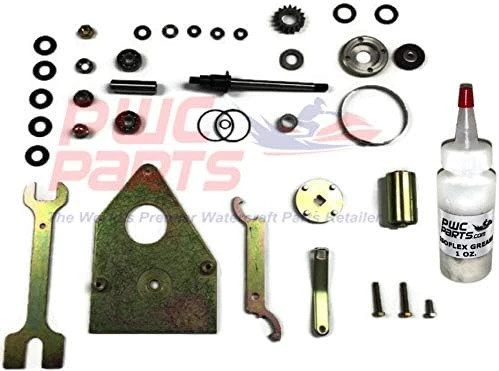
Most Sea-Doo rebuild kits ship with new bearings, seals, IsoFlex grease, a slip-torque testing tool (or instructions for one), and — critically — a set of upgraded metal washers in place of the brittle OEM ceramic washers that Sea-Doo phased out in 2007. If you're servicing a 2004-2013 215/255/260 HP platform, the Sea Doo RXP-X / RXT-X / GTX-SC Supercharger Rebuild & Tool Kit (P/N 420881102) includes both the full rebuild kit and the six specialty tools you need to do the job on the bench. For 2016-2024 GTX LTD, RXP X, and RXT X models running the 1630 ACE HO engine, the WSM Supercharger Kit for Sea-Doo 1630 4-Tec is a direct replacement for the OEM service components.

Yamaha SHO/SVHO Supercharger Service: Clutch and Dampener Wear
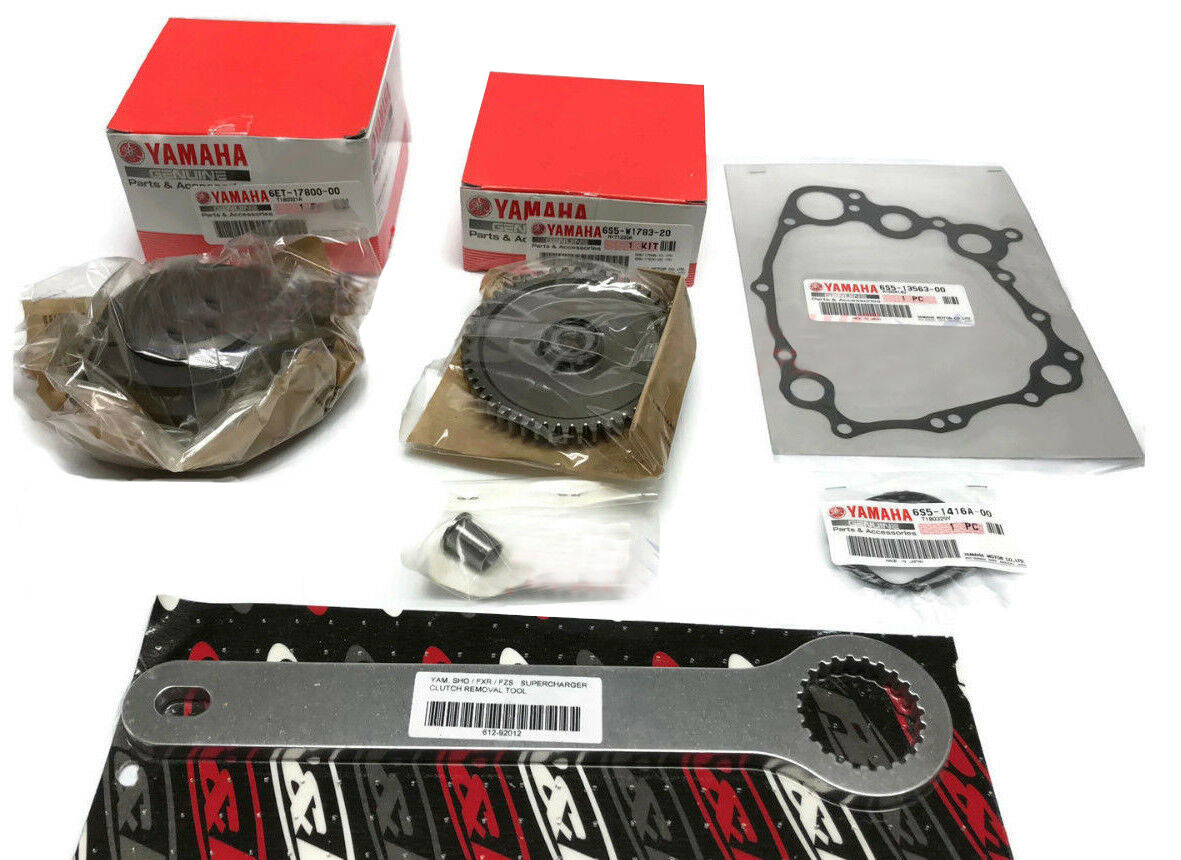
Yamaha's 1.8L supercharged platform has a different failure mode. Instead of ceramic washers clamping the impeller shaft, Yamaha uses a fiber-faced clutch and a rubber dampener inside the drive gear. When the fiber surfaces glaze or the dampener cracks, you'll hear a metallic "rattle" at idle that gets louder the moment you lift off the throttle. Left alone, the clutch teeth eventually grenade and take the drive gear with them. A full refresh on a 2014+ FX-SHO, FX-SVHO, FZR, FZS, or GP1800 uses the YAMAHA FX-SVHO GP1800 Supercharger Upgrade Kit (Clutch, Dampener & Gaskets), which includes the OEM 57-tooth clutch, a new dampener, and the gaskets you'll disturb on the way in.
Rebuild or Replace? How to Decide
If the impeller wheel shows no blade damage, the housing isn't scored, and the shaft runs true, rebuild. Kits run $250-$450 and, with the right tools, a careful owner can knock out the job in an afternoon. If the unit ingested debris, overheated, or came apart on the water, replacement is the only safe call — any residual FOD (foreign object debris) left behind will destroy the new bearings within hours. When you pull the unit off the engine, spin the shaft by hand. Any grinding, axial play beyond 0.002", or visible blade nicks means the core needs to come out of service.
Installation Tips From the Bench
A few habits separate a clean rebuild from a comeback. Always measure slip torque after reassembly — too loose and the clutch slips under boost; too tight and the shaft shears. Use only the specified IsoFlex Topas NB 52 grease on the clutch washers; any petroleum-based lubricant will cook and cause immediate failure. Torque the impeller nut to the manufacturer's spec with a calibrated wrench — not "tight enough." And before you button up the airbox, wipe the intake tract. Any debris left in the housing will head straight into that brand-new impeller at 50,000 RPM the first time you squeeze the throttle.
Frequently Asked Questions
How often should I rebuild my Sea-Doo supercharger?
Every 100 hours of engine runtime or every two years, whichever comes first. If you ride in saltwater, rent, or run the ski hard, tighten that interval to 75 hours. A rebuild means new bearings, seals, washers, and grease — plus a slip-torque check.
Can I rebuild a jet ski supercharger myself?
Yes, if you have the right tools and a torque wrench. The Sea-Doo rebuild requires a specialty tool kit to hold the shaft, compress the washers, and verify slip torque. Yamaha clutch service requires a clutch holder tool. Both are included in the PWCParts.com rebuild bundles linked above. Budget three to four hours for your first time.
What happens if I skip a supercharger rebuild?
On Sea-Doo platforms, failed ceramic washers send shrapnel into the intercooler and engine, often destroying pistons and rings — a $4,000-$8,000 repair. On Yamaha, a failed clutch can strip the drive gear and contaminate the oil system. The $350 rebuild is the cheapest service you'll ever do on a supercharged PWC.