
How to Check Your Jet Ski Fuel System: Inspection and Maintenance
Posted by PWCParts Team on Apr 30th 2026
How to Check Your Jet Ski Fuel System: Inspection and Maintenance | PWCParts.com
Nothing ruins a day on the water faster than a PWC that sputters, stalls, or refuses to start. In most cases, the culprit is hiding somewhere in the fuel system. Whether you ride a Yamaha WaveRunner, Sea-Doo, or Kawasaki Jet Ski, keeping the fuel system in top shape is one of the highest-impact maintenance tasks you can do. This guide walks you through a complete fuel system inspection — from the tank to the injectors — so you can troubleshoot problems before they leave you stranded offshore.
Why Fuel System Maintenance Matters for PWCs
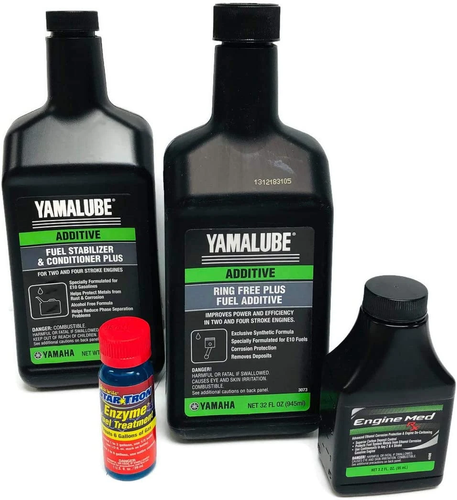
Personal watercraft engines are high-revving machines that demand clean, consistent fuel delivery. Ethanol-blended pump gas (E10 or higher) is particularly hard on PWC fuel systems — ethanol absorbs water, degrades rubber lines over time, and leaves varnish deposits that clog carburetors and fuel injectors. Add in the fact that most PWCs sit idle for months during winter storage, and you have the perfect recipe for fuel system trouble. A proactive inspection each spring and at regular service intervals keeps fuel-related failures from catching you off guard.
Step 1: Inspect the Fuel Tank and Fuel Cap
Start at the source. Open the storage hatch and visually inspect the fuel tank for cracks, discoloration, or swelling — any of these signal a tank that needs attention. Remove the fuel cap and check the gasket for cracking or hardening. A bad fuel cap gasket allows air into the tank and can cause vacuum lock or vapor lock conditions. Look inside the cap vent for obstructions; a clogged vent creates negative pressure that starves the engine of fuel at high RPM.
While you're there, check for water contamination. Drain a small amount of fuel from the lowest accessible point (or use a siphon) into a clear container. Clean gasoline is bright and clear; water-contaminated fuel will show a distinct separation layer at the bottom, and microbial growth from ethanol-water interaction looks cloudy or brownish. If contamination is present, drain the tank completely before proceeding.
Step 2: Check the Fuel Lines and Connections
Fuel lines on a PWC endure heat, vibration, and contact with ethanol fuel — a combination that cracks and hardens rubber hoses over time. Run your fingers along every accessible fuel line from the tank to the engine. Squeeze the line gently; old lines feel brittle and may crack under slight pressure. Look for:
- Cracks, splits, or abrasion marks on the exterior
- Soft, swollen sections (indicates ethanol degradation)
- Leaks at hose clamps — look for fuel staining or residue
- Loose or corroded hose clamps
Replace any suspect hose immediately. For universal replacements that work across Sea-Doo, Yamaha, and Kawasaki models, a quality polyurethane fuel hose kit — like the PWC Jet Ski Blue Poly Fuel Hose Line 6mm with Clips and Filter available at PWCParts.com — gives you enough line to replace multiple sections along with the clamps needed to secure them properly.

Step 3: Inspect and Replace the Fuel Filter
The fuel filter is your engine's last line of defense against particles, rust, and debris. Most PWCs have one or two filters — a primary inline filter between the tank and fuel pump, and sometimes a secondary filter at the carburetor or injector rail. Filters should be inspected every season and replaced every one to two years, or anytime you notice rough running or hesitation at full throttle.
To check the inline filter, look for discoloration (it should be translucent and show clean fuel) and physically inspect it for debris buildup. A brown or opaque filter is well overdue for replacement. For Kawasaki models like the 1100 STX and Ultra 130, the Kawasaki Inline Fuel Filter (006-511) from PWCParts.com is a direct OEM-spec replacement that drops right in with no modification needed.

When replacing the filter, note the direction of flow — most filters have an arrow embossed on the body indicating which end faces the fuel tank. Installing it backwards will restrict flow and create the same symptoms as a clogged filter.
Step 4: Test the Fuel Pump
The fuel pump is responsible for maintaining consistent fuel pressure to the carburetor or injector system. On most PWCs, the pump is a diaphragm-style pulse pump or an electric pump mounted near the engine. Signs of a failing fuel pump include:
- Hard starting, especially when hot
- Engine cutting out under heavy load or at wide-open throttle
- Rough idle that clears up momentarily then returns
- Fuel pressure readings below manufacturer spec (typically 2–5 PSI for carbureted models, 40–60 PSI for EFI)
To do a basic functional test on a carbureted PWC, disconnect the fuel line at the carburetor inlet, place it in a container, and crank the engine briefly. You should see a strong, pulsing stream of fuel. A weak trickle or no flow indicates either a failed pump or a blockage upstream. For a more precise test on EFI models, use a fuel pressure gauge connected to the Schrader valve on the fuel rail and compare the reading to your service manual's spec.
If the pump needs replacement, PWCParts.com carries a full range of fuel pumps for Sea-Doo, Yamaha, Honda, and Kawasaki PWCs, including both OEM and performance aftermarket options.
Step 5: Inspect the Carburetor or Fuel Injectors
On older two-stroke and some four-stroke PWCs, a carburetor meters fuel into the engine. Carbs are highly susceptible to varnish buildup from ethanol fuel sitting during storage. Symptoms of a dirty carb include: rough idle, bogging under acceleration, black smoke, and fuel leaking from the bowl drain. A thorough cleaning with carburetor cleaner spray and a rebuild kit (new needle, seat, gaskets, and float bowl o-ring) is often all it takes to restore performance.
On modern EFI-equipped PWCs (most post-2012 models), fuel injectors can gum up similarly. The tell is typically a misfire code stored in the ECM. Injector cleaner added to the fuel tank helps as a preventative measure; for stubborn injectors, an ultrasonic cleaning service or outright replacement may be necessary.
Step 6: Check the Fuel Valve (Petcock)
Many older PWC models have a manual fuel shutoff valve — known as a petcock — between the tank and the fuel pump. This valve should move freely between ON, OFF, and RESERVE positions. A stuck or leaking petcock allows fuel to seep past the diaphragm and into the engine oil or bilge, which is both a performance issue and a fire hazard. Replace a leaking petcock immediately. PWCParts.com stocks fuel valves for a wide range of Kawasaki, Yamaha, and Sea-Doo models.
Frequently Asked Questions
How often should I replace the fuel filter on my jet ski?
Most manufacturers recommend inspecting the inline fuel filter every season and replacing it every one to two years. If you notice hard starting, hesitation, or rough running — or if the filter appears discolored or clogged — replace it immediately regardless of age. Riders who store their PWC with fuel in the tank during winter should also replace the filter as part of spring recommissioning.
What causes a jet ski fuel pump to fail?
The most common causes are age, ethanol-blended fuel degradation, running the PWC with a low fuel level (which stresses electric pumps that rely on fuel for cooling), and debris bypassing a failed filter and damaging the pump internals. Using ethanol-treated fuel stabilizer during storage, keeping the tank topped off in winter, and replacing the fuel filter on schedule all extend pump life significantly.
Can I use ethanol-free fuel in my PWC?
Yes — and many experienced PWC riders prefer it. Ethanol-free premium fuel (typically sold as "recreational fuel" or "REC-90" at marine dealers) eliminates the water-absorption and rubber-degradation issues associated with E10. It also stores longer without going stale, which is ideal for seasonal riders. If ethanol-free fuel isn't available in your area, always use a marine-grade fuel stabilizer with ethanol treatment whenever you're filling up or preparing for storage.